Desire held back by hesitation
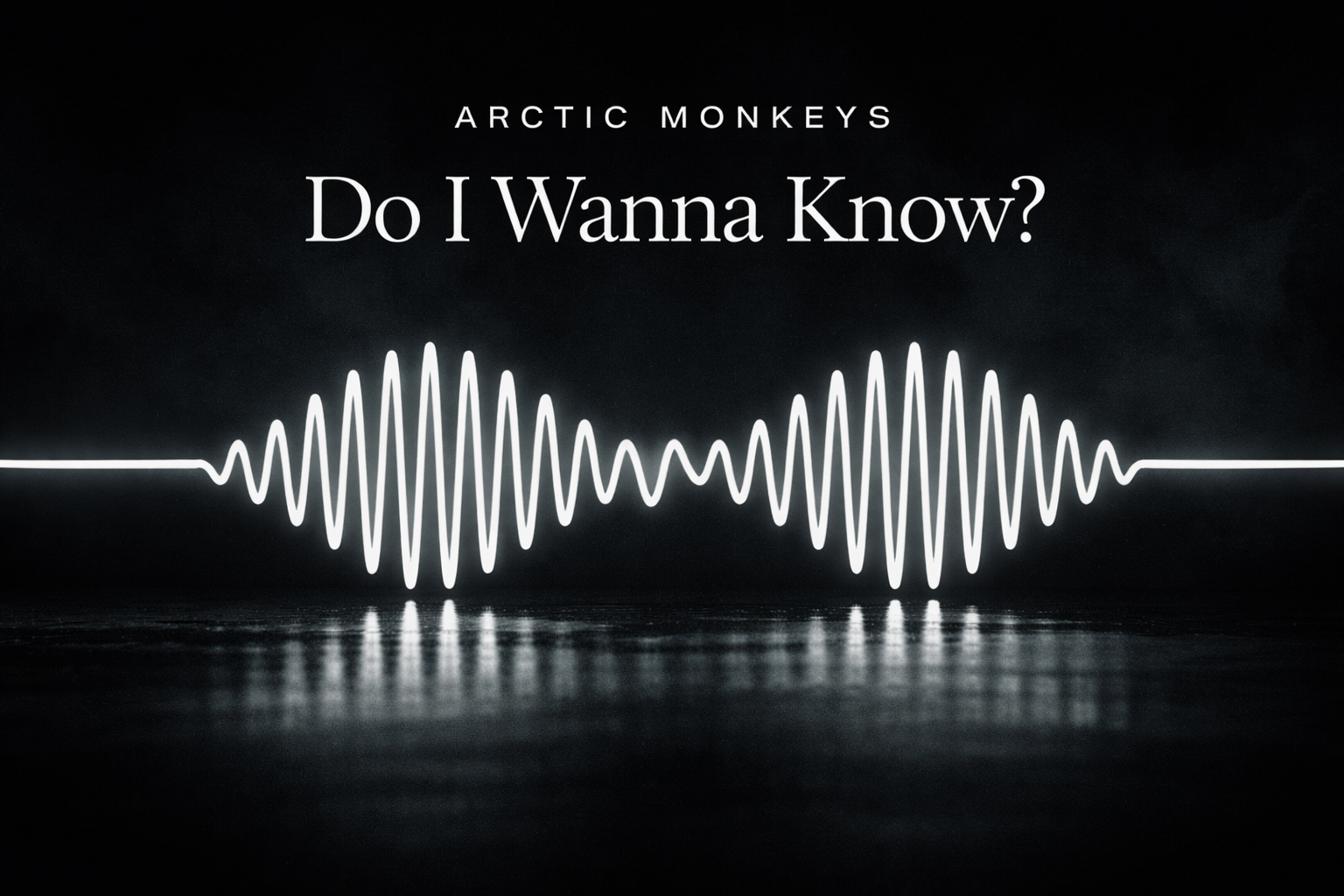
“Do I Wanna Know?” revolves around a familiar dilemma: wanting to know whether the other person feels the same, while hesitating to ask directly. The song captures that delicate space between attraction and pride, between vulnerability and self-protection.
The slow, heavy guitar riff sets the tone immediately. It feels persistent, almost obsessive, mirroring the repetitive thoughts that come when someone occupies your mind late at night.
“Have you got colour in your cheeks?”
Have you got colour in your cheeks?
The line sounds casual, but it carries subtle tension. A blush can signal embarrassment, excitement, hidden feelings. Instead of making bold declarations, the lyrics rely on indirect questions and small details. That indirectness defines the dynamic described in the song.
The relationship itself feels undefined. There’s a sense that something has happened before, and maybe something still lingers, but nothing is clearly stated. Much of the tension lives in what isn’t said.
Pride versus vulnerability
At the center of the song lies the question:
Do I wanna know if this feeling flows both ways?
It’s not just about curiosity. It’s about risk. Asking means exposing yourself to a possible rejection. Remaining silent protects pride but prolongs uncertainty.
The song captures that internal struggle without dramatizing it. There’s no explosive confession. Instead, there’s a steady tension that never fully resolves.
Sound and repetition
The production reinforces the theme. The repeating guitar riff feels like a looping thought, one that keeps returning no matter how much you try to distract yourself. The restrained vocal delivery adds to the atmosphere, keeping everything slightly contained.
The song never reaches a clear emotional breakthrough. It stays suspended in doubt, which makes it feel honest.
Living inside the question
“Do I Wanna Know?” resonates because it focuses on a specific emotional moment: the hesitation before action. It doesn’t offer closure. It leaves the listener inside the question.
And sometimes, that unresolved space is the most relatable part of all.