Today we’re talking about Paradise, released in September 2011 as the second single from the album Mylo Xyloto, a track that represents a very specific chapter in the evolution of Coldplay. It comes after the global success of Viva la Vida or Death and All His Friends from 2008, a record that had already pushed the band toward more orchestral and ambitious sounds.
Here, however, the group blends electronic pop, stadium rock, and a narrative concept centered around two characters growing up in an oppressive city, lost within the cracks of adult life. Paradise fits perfectly into this framework as the female voice of the story, the one trying not to give in to reality’s fractures.
The title Paradise is not random. It comes from the ancient idea of a perfect place, an ideal refuge imagined across cultures as an escape from everyday pain. Chris Martin and the band use it here to describe that mental space where the protagonist retreats when the real world slips out of her control.
The roots of Mylo Xyloto and how Paradise found its place
Mylo Xyloto was conceived as a concept album blending love, rebellion, and creativity within a “gray and controlled” environment. The band drew inspiration from 1970s American graffiti culture and the White Rose movement, the nonviolent German resistance against Nazism.
The album tells the story of two young people meeting in a city where color and sound are almost forbidden. Paradise becomes the soundtrack of the girl, the one who once expected everything and later learns how to reinvent herself.
The origin of the song is particularly interesting. Chris Martin initially wrote it as a potential track for the winner of The X Factor UK in 2010. The show’s producers wanted something epic for the eventual winner. However, Will Champion insisted that the song belonged on Mylo Xyloto.
That decision transformed Paradise from a possible talent show anthem into a core piece of a conceptual album.
What Chris Martin said about the song
Chris Martin has always been clear about the meaning behind Paradise. In interviews, he explained that the song is about the hopes of a young girl, the female half of the album’s narrative. It’s not strictly autobiographical, but it reflects the confusion many people feel when childhood ends and adulthood becomes more complex.
He described Mylo Xyloto as a love story with a happy ending set in an oppressive world. The girl in Paradise is someone who, feeling lost, finds her escape through imagination.
The band deliberately leaves room for interpretation. For Martin, the song represents freedom of expression, even the freedom to invent new words when existing ones aren’t enough. In that sense, Paradise becomes an invitation not to stop at life’s first disappointments.
First verse analysis: when expectations slip away
The song opens with two simple lines:
When she was just a girl
She expected the world
Here we meet the protagonist as a child, full of the kind of confidence that comes before reality hits. She expects everything, like in the stories she grew up with. Then comes the turning point: the world “flew away from her reach.” There’s no dramatic explosion, just a quiet realization.
Coldplay capture a universal moment without overcomplicating it. That first disappointment becomes the driving force of the entire song. The girl grows into a young woman who learns that expectations can turn into frustration, but she doesn’t completely give up. Instead of fighting the wind, she chooses another path.
The chorus: para-para-paradise as a refuge
The chorus is extremely catchy, yet emotionally layered:
And dreamed of para-para-paradise
The repetition of “para-para” isn’t just playful. It represents the way the girl’s mind escapes through dreams. Every time she closes her eyes, she flies somewhere else.
Paradise is not a physical place but a mental one. It’s where she rebuilds what reality has taken from her. The repetition creates a hypnotic effect, mirroring that drifting sensation between wakefulness and sleep.
Second verse: the weight of life
Life goes on, it gets so heavy
The wheel breaks the butterfly
Life continues, but it becomes heavier. The image of the wheel crushing the butterfly is powerful without being overly dramatic. It shows how fragile things are often destroyed by the mechanics of everyday life.
Then come the tears, described like waterfalls. This isn’t self-pity, but acceptance. The girl understands that pain is part of life, yet she keeps escaping into her dreams.
At this point, she is no longer the naïve child. She has seen reality’s cracks but chooses not to surrender.
The ending: hope and resilience
Toward the end, a key line appears:
I know the sun must set to rise
This is grounded hope. It doesn’t deny darkness, it simply accepts that light will return. The song closes with “This could be para-para-paradise”, suggesting that paradise might not be just a distant dream, but something that could exist here and now.
At its core, the song is about hope, about understanding that after every storm, the sun eventually returns.
The music video and its symbolism
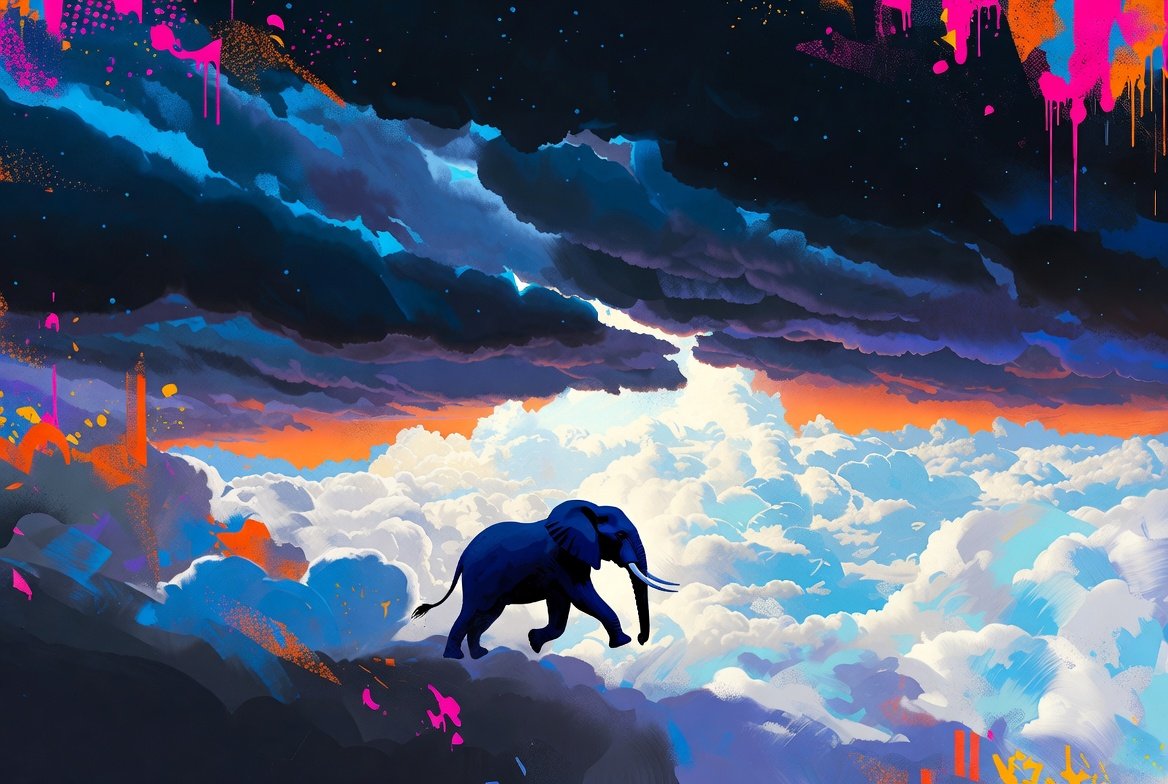
The official video, directed by Mat Whitecross, shifts perspective. Instead of a girl, we see an elephant painted in bright colors escaping from a zoo to reunite with a group of elephants playing music.
The elephant symbolizes the same desire for freedom expressed in the lyrics. The gray city becomes the cage, while paradise is the place where individuality is accepted.
The choice of an elephant is meaningful. It represents strength and memory, but also feeling out of place. In the video, it becomes a metaphor for anyone searching for where they truly belong.
Cultural impact and legacy
Since 2011, Paradise has accumulated hundreds of millions of streams and remains one of the band’s most performed live songs. It marked a shift toward a more accessible sound without losing emotional depth.
In popular culture, it has helped many people process disappointment and personal struggles. Listeners who discovered it as teenagers often return to it later in life, finding new layers of meaning.
Coldplay in 2011: a band in transition
In 2011, Coldplay were at their peak but also under pressure. After the success of Viva la Vida, they needed to prove consistency. Paradise reflects that moment of transition.
The band experiments with new sounds, embraces pop more openly, and tells personal stories through fictional characters. Chris Martin, already a father at the time, brings a mix of realism and hope into the songwriting.
The result is a song that observes reality while still choosing to dream.
What do you think about the meaning of Paradise? Do you interpret it differently? Feel free to share your thoughts, I’m always curious to see how others connect with songs like this.