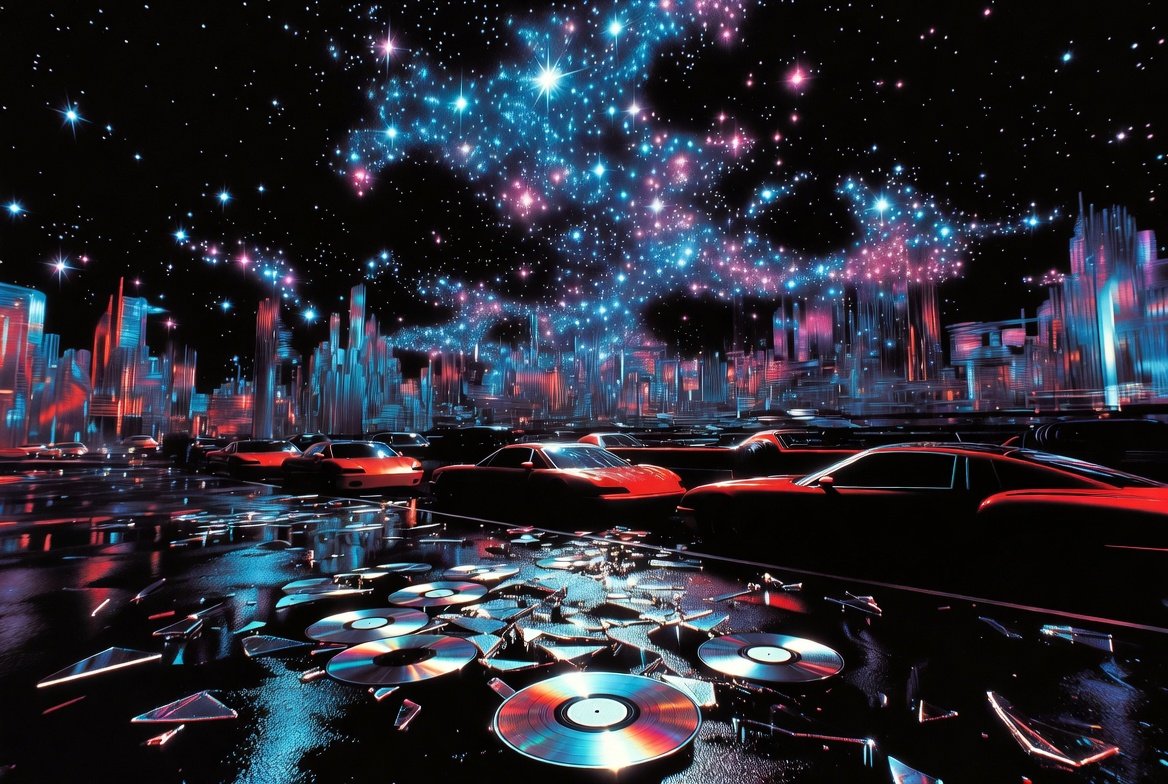
Starboy was released in September 2016 as the lead single from the album of the same name, and it immediately stood out for its hypnotic groove crafted alongside Daft Punk. It is not just a track to dance to under strobe lights. It feels like a statement of intent, almost a postcard sent from the center of fame. The Weeknd, born Abel Tesfaye, chooses to present himself without filters, or perhaps with very expensive ones, and tells what it means to become a star in a world that rewards excess above everything else.
I have always seen this track as a kind of sonic diary where the artist confronts his own evolution. There is no room for easy sentimentality. It talks about money pouring in, nights that never seem to end, and an identity reshaped in the fire of celebrity. All of it enhanced by that futuristic electronic touch Daft Punk brought into the studio, working with almost surgical precision on every sonic detail.
The meaning behind the title
Starboy is not a term invented on the spot. In Jamaican slang it refers to someone cool, someone important, a person at the top of the social hierarchy. The Weeknd takes that idea and turns it into his alter ego, the bold and arrogant version of himself ready to crush anyone who doubts his status.
Think about the line repeated in the chorus: “Look what you’ve done, I’m a motherfuckin’ starboy.” It sounds like an accusation thrown at those who contributed to this transformation, but also a declaration of power. It is as if he is saying to the world, and maybe to himself, look at what you created. You pushed me up here among the stars, and now I am staying.
In the video, this idea becomes even clearer. A figure suffocates the old self with a plastic bag, cuts away the past hairstyle, and destroys framed trophies. It is not random violence. It is a ritual of transition, a way of saying goodbye to the underground and embracing the throne of pop culture. The red cross symbol, marking elimination, almost becomes a signature for someone who wants to reset everything.
Luxury as everyday language
One of the most striking aspects of the song is how luxury is described with the same casual tone others use to talk about the weather. The McLaren P1 is cleaner than church shoes. “Milli point two” casually references millions just to provoke the listener. Then there is the red Lamborghini, empty houses that need a twenty thousand dollar centerpiece, tables carved from ebony.
This is not simple flexing. It feels like a challenge. The Weeknd is telling critics: while you talk, I live. My car is cleaner than your Sunday morality. It is playful, almost ironic, a way of flipping criticism on its head. Those who accuse him of excess receive a list of things they could never afford.
There is also a layer of double meaning. The P1 can hint at something else entirely, something more illicit. References to substances and parties are present but remain subtle, like a constant background noise. It is not about glorifying addiction, but acknowledging that it often comes with the territory at that level of fame.
The emptiness behind the lights
Yet not everything shines as it seems, and The Weeknd makes that clear. One of the sharpest lines is “House so empty, need a centerpiece.” The house is massive, but empty. It needs something expensive just to fill the space. Then comes the closing thought: “We don’t pray for love, we just pray for cars.”
This is where the tone shifts. The bravado gives way to awareness. Fame has replaced love with objects. Prayers are no longer directed toward human connection, but toward material things. It feels like a moment of clarity in the middle of a party. As if, between drinks, the artist realizes that the throne comes at a cost: loneliness.
The Starboy has everything, yet the center remains empty. That emptiness becomes the hidden engine of the song, pushing the cycle forward. Keep buying, keep celebrating, because stopping would mean looking inward.
The collaboration that changed everything
Daft Punk did not join the project by accident. Their electronic touch, especially the use of vocoder in the chorus, gives the track a slightly robotic aura. It feels like The Weeknd is turning into a hit making machine, precise and unstoppable.
During recording sessions, the duo were known to be extremely meticulous, adjusting even the smallest details for hours. You can hear it in the final result. The beat pulses like an artificial heart, hypnotic and cold, perfectly matching the world described in the lyrics. It is no surprise the song reached number one in many countries. It captured the essence of an era defined by glowing screens and curated lives.
How the lyrics portray life after success
In later verses, the song paints a fast paced picture of fame. Relationships become transactional, wealth accumulates rapidly, and everything is acquired instantly. It is a world of speed, excess, and constant comparison.
The Weeknd does not hide behind modesty. He knows this persona may sound arrogant, but he embraces it. It becomes a form of armor. Without that confidence, the pressure of fame might be overwhelming. Instead, he turns it into fuel.
What makes the track interesting is how it works both as a celebration and a distortion. While listening, you might wonder if you would make the same choices in his position. The answer is not always comfortable.
Details that make the track even richer
There is a clear hip hop influence behind the attitude. The Weeknd has mentioned artists like Wu Tang Clan and 50 Cent as inspirations, especially that unapologetic braggadocio. Starboy feels like a polished, modern evolution of that style, fused with electronic production.
Timing also plays a key role. Released after the massive success of Beauty Behind the Madness, the track marks a symbolic break from the past. New look, new sound, new identity. The video makes it explicit, but the lyrics already hint at it from the very beginning.
Its global success, from Canada to France to the United States, shows how deeply it resonated. There is a universal appeal in the fantasy of becoming a starboy, even if few truly understand the cost of wearing that crown.
What remains after listening
In the end, Starboy is more than just a party track. It is a snapshot of a moment when an artist reaches the peak and reflects on what that means. It shows how fame reshapes priorities, turning people into icons while isolating them at the same time.
The Weeknd uses luxury as a metaphor for power, but allows cracks to show beneath the surface. The repeated chorus becomes almost like a mantra. Look what you’ve done. It is both accusation and acknowledgment. This is what I have become, and I am holding onto it.
Starboy is about accepting a new identity built on excess and neon lights, while being aware that underneath there is a void filled with cars and diamonds instead of real connection. It is the celebration of an expensive rebirth, delivered with a knowing, almost ironic smile.