

June 1965, Bob Dylan walked into the studio with an idea that would split the history of music in two. The result was a six-minute track that no one wanted to play on the radio because of its length, yet it ended up becoming a turning point for rock lovers. Here we’re talking about the meaning of Like a Rolling Stone, that piece Dylan himself described as coming out of a “vomit” of pages written in a state of exhaustion after the English tour.
The song opens Highway 61 Revisited and marks the moment when the acoustic folksinger transforms into an electric rocker. Al Kooper, invited almost by chance, adds that swirling organ that still gives you chills on first listen. Dylan’s voice is sharp, almost scornful, while the rhythm flows without pause.
The context that gave birth to the meaning of Like a Rolling Stone
Dylan was coming off months of concerts where folk audiences demanded only acoustic protest songs. He, however, felt the need to push further. He first wrote a very long text, full of accumulated anger, then distilled it into four verses and a chorus that repeats the most uncomfortable question possible.
Look how lucky you were to discover how the world really works.
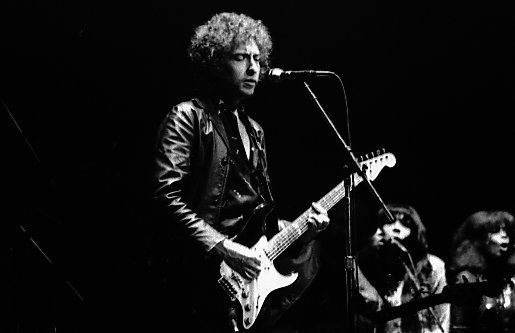
In 1965 America was experiencing the first cracks in the postwar dream. Young people were beginning to question class rules, suburban conformity, the certainties of those born with a clear path ahead. The song arrives precisely in that climate and captures it without filters. Dylan shows it. And he does so with a sound that blends blues, emerging rock and the folk he was leaving behind.
The song reached number two on the charts in the United States, held back only by “Help!” by the Beatles, and remained in the charts for twelve weeks. In England it reached number four. But the numbers matter little compared to the effect it had on the musicians who came after: from the Rolling Stones to the Velvet Underground, everyone felt that the rules had changed.
The first verse and the ironic portrait of the golden life
“Once upon a time you dressed so fine
You threw the bums a dime in your prime, didn’t you?”
The fairy-tale opening “once upon a time” is ironic. The protagonist, called Miss Lonely in the lyrics, lived at the top of the social pyramid. She handed out alms as a gesture of superiority, convinced her position was eternal. The final “didn’t you?” is a low blow: Dylan forces her to remember, almost to confess.
A precise psychological mechanism comes into play here. Those who have always looked down from above develop a sort of selective blindness toward others’ fragility. Charity becomes performance, not empathy. When the fall comes, that same person finds herself begging for the gaze she once distributed with condescension. Culturally, the line captures 1960s American society: a country that believed in the self-made man but hid the safety nets for those already born at the top. Miss Lonely represents that bubble bursting. She is not just a rich woman ending up on the street: she is the symbol of an entire generation watching inherited invulnerability collapse.
The social analysis becomes even sharper when we think about the postwar context. The economic boom had created a new class of privileged people who felt secure. Dylan, the son of a middle-class Jewish family from Minnesota, observes everything from the outside and records the crack. The line does not judge only the protagonist: it questions the system that allows someone to “throw a dime” without ever imagining having to ask for one.
The mystery of the tramp and the pact with reality
“You said you’d never compromise
With the mystery tramp, but now you realize
He’s not selling any alibis”
The second verse introduces the “mystery tramp,” an ambiguous figure representing the street, life without a safety net. Miss Lonely had sworn she would never deal with certain types of people. Yet now she finds herself staring into the emptiness of his eyes and proposing a deal. The “do you want to make a deal?” is one of the harshest moments of the song: there is no pride left, only necessity.
This passage describes the moment when the ideal self collapses and makes room for the real self. The person used to controlling everything discovers that life does not accept preventive negotiations. The emptiness in the tramp’s eyes becomes a mirror: inside it lies the same absence of certainties she now has to face.
Socially, the line criticizes the American myth of meritocracy. Many believed they could stay above the fray thanks to the right schools and the right connections. Dylan shows that one misstep is enough for the springboard to turn into a trap.
In the 1960s young people were beginning to deliberately choose the road, to “drop out,” as Leary would soon say. Miss Lonely does not choose: she is pushed. Yet precisely in that push lies the possibility of an authenticity she did not have before. The pact with the tramp is not defeat: it is the first step toward a life without masks.
The chorus and the question that remains suspended
“How does it feel
To be without a home
Like a complete unknown
Like a rolling stone?”
The chorus is the most famous and also the most ambiguous part. Dylan gives no answers: he asks the question four times, with minimal variations that change everything. “Without a home” becomes “on your own,” “no direction home.” The rolling stone recalls the English proverb that “a rolling stone gathers no moss”: freedom or condemnation?
The feeling of being a “complete unknown” is terrifying for someone who has always lived on social recognition. Yet precisely in being no one lies a liberation. Without secrets to protect, without a reputation to defend, one can finally breathe. Dylan seems to suggest that true identity emerges only when every external support disappears.
From a cultural point of view, the chorus speaks to the generation that was about to invent hippie nomadism. The “rolling stone” becomes a metaphor for an entire era: better to roll rootless than to stand still collecting the dust of conventions.
The song dismantles the idea that stability is synonymous with happiness.
“Nothing to lose,” as the last verse will say. It is an invitation to rethink the value of things: when the superfluous disappears, only the essential remains.
Many have seen in Miss Lonely a portrait of Edie Sedgwick, Warhol’s muse who went from jet set life to addiction. Others read it as autobiographical: Dylan abandoning “safe” folk for risky rock.
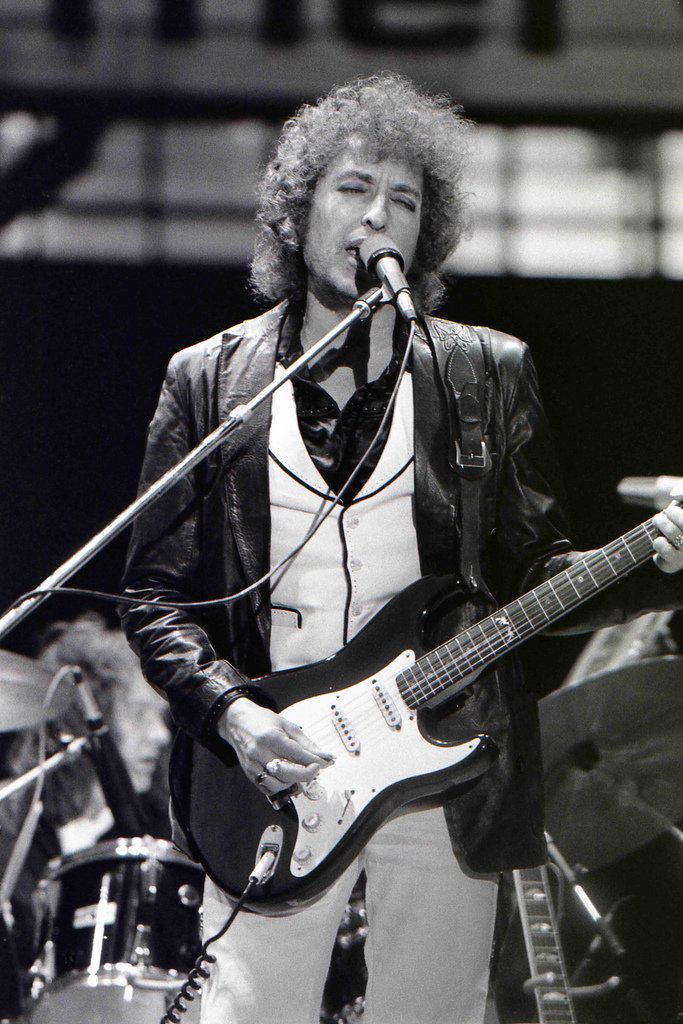
In reality, the song works because it is universal. Anyone who has lost a job, a relationship, a certainty can recognize themselves in those lines.
The musical impact that changed the rules
The recording lasted hours. Dylan changed keys, tried different versions. Al Kooper, sitting at the organ almost as a joke, found the sound that still defines the track today. The song runs over six minutes: madness for singles of the time. Yet radio stations played it in full. The audience understood that something big was happening.
Dylan never went back. After this song, pure folk became only one part of his story. Rock gained lyrical depth and pop learned it could last longer than three minutes. Artists like Bruce Springsteen, Patti Smith, even Dire Straits cited that sound as a starting point.
The song continues to live because it does not age. Every time someone feels lost, the chorus becomes useful, not because it comforts you, but because it challenges you, asking you to face the situation and decide whether that rolling stone is a sentence or the opportunity to begin something authentic.
Today, as we listen to the original version or one of the thousand covers, we realize that the meaning of Like a Rolling Stone does not end in a single analysis. It is an open question that each person must answer in their own way. Dylan does not offer comfortable solutions. He leaves us with the feeling of being on the road, without a map, but finally free to choose the direction.
As you are free to choose to help this website grow! Share this article with your friends if you like, and comment below to express your point of view! 🙂