
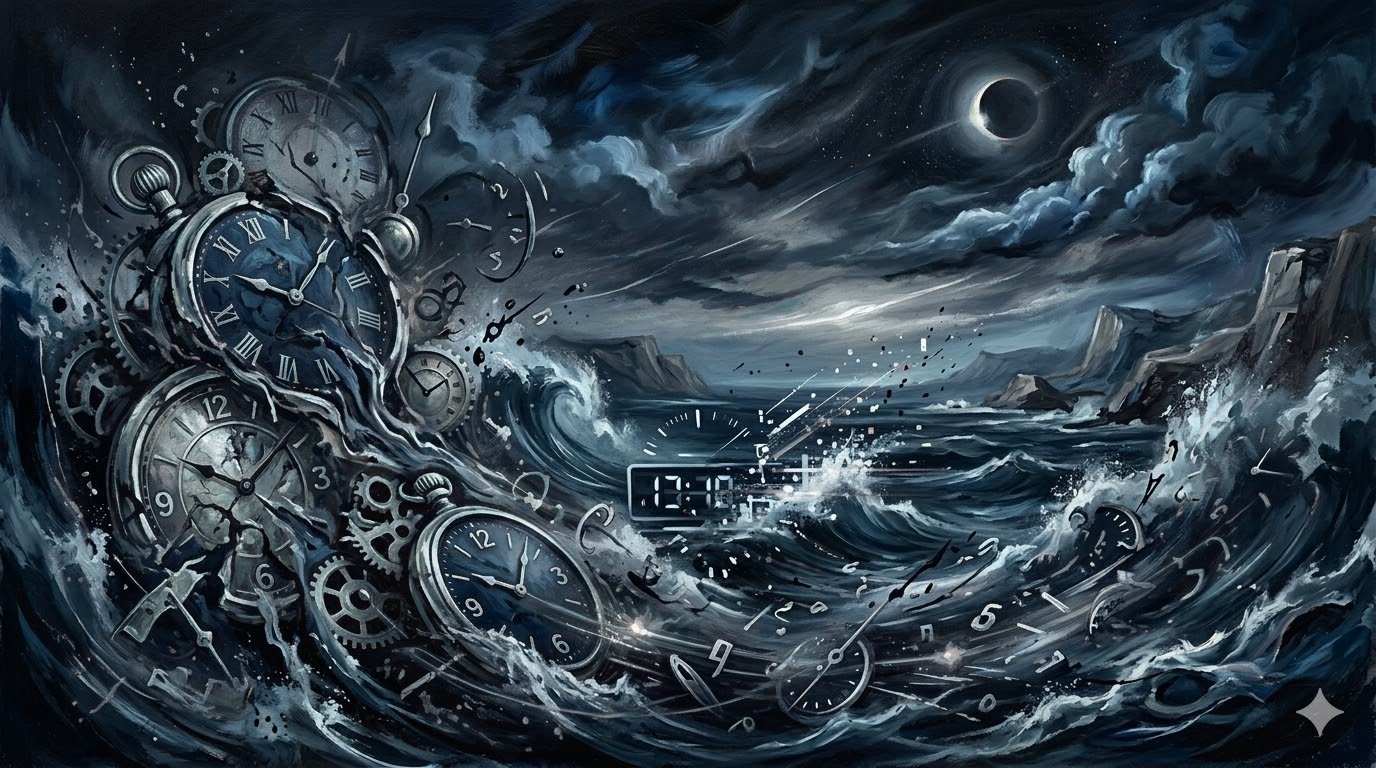
That feeling of racing against time while an important relationship slips through your fingers. The meaning of Clocks Coldplay, the track released in 2002, is tied to A Rush of Blood to the Head and marked a turning point for Coldplay.
Its hypnotic piano riff carries a song about relationships that feel like temporal prisons, about choices that weigh heavily, and about a clock that never stops ticking. Today, with our days filled with notifications and endless commitments, that ticking sounds louder than ever.
The birth of the song that almost disappeared
The album already seemed finished. The tracklist had been decided when, during the final recording sessions, sitting at a piano in a Liverpool studio, Chris Martin started playing around with notes and created that riff. It was incredibly simple, yet instantly recognizable.
The band recorded it quickly, almost casually. But their manager Phil Harvey heard it and insisted: “This has to be on the record.”
Guitars and drums were added at the last minute, even pushing the album’s release back by a few months. Martin has often said he cannot read music, yet that sequence of notes came to him like a flash. The result is a sound that blends urgency and melancholy, with the piano almost sounding like it is counting the seconds passing by.
The band was lucky to have someone who recognized a raw gem. Sometimes the best things appear when you think everything is already finished.
The meaning of Clocks Coldplay in the opening images of the lyrics
The lights go out and I can’t be saved
Tides that I tried to swim against
This opening immediately places you in a position of surrender, an internal collapse within a relationship. The tides become a symbol of forces that cannot be controlled, emotions or habits that pull you under despite all your efforts. Trying to swim against the current eventually leaves you on your knees, begging for something that might never arrive.
The phrase “beg and plead” suggests the awareness that some things remain unspoken, like a weight sitting on your chest without a name. And that “trouble that can’t be named” perfectly describes the kind of emotional discomfort in love that has no clear label. It is a quiet tension that grows slowly.
The song makes you feel that the struggle has been long and perhaps pointless. Anyone listening immediately recognizes that sensation of having tried everything with no result. The lights going out are not just a visual metaphor. They represent hope fading gradually while the world around you keeps moving.
Here the meaning of Clocks by Coldplay begins to take shape. It feels close to resignation. It leaves you with a silent question: how much is it worth fighting against something that is stronger than you?
Have you ever argued with someone and suddenly realized you were talking about two completely different things? That feeling of rowing against the current while the other person is already standing on the shore. Chris Martin turned that exact moment of bitter clarity into music.
Interpretation of the lyrics of Clocks Coldplay between walls and clocks
Confusion never stops
Closing walls and tickin’ clocks
The second section raises the sense of claustrophobia. Closing walls evoke a relationship that becomes an emotional prison, while the clocks remind us that every lost minute will never return. The narrator promises “gonna come back and take you home,” yet immediately admits he could not stop himself before.
It is a paradox many people experience. Knowing exactly what would be needed to save things, yet continuing to make the same mistakes.
The rhythm of the song, with that repetitive piano, reinforces the idea of circular movement with no escape. The confusion is not temporary. It is constant, like background noise that cannot be turned off.
The tides mentioned earlier transform into advancing walls. The protagonist feels trapped in a cycle of broken promises and missed opportunities. Yet he keeps repeating that line about coming back home, as if saying it enough times might make it real.
This section shows how the meaning of Clocks Coldplay is rooted in everyday relationships. There are no dramatic explosions, just small mistakes piling up until they become walls. The ticking clock becomes the silent protagonist pushing everything forward.
The hidden meaning of Clocks by Coldplay in its biggest doubt
Am I a part of the cure
Or am I part of the disease?
This question is the heart of the entire song. The narrator questions himself without mercy. He no longer knows whether his role in the relationship is helping or making things worse. It is a moment of brutal honesty that few lyrics manage to capture so precisely.
The doubt is not only about the other person. It is about oneself. How many times have we wondered whether our efforts are actually helping or simply feeding the problem?
The song offers no easy answers. It leaves the doubt hanging in the air, exactly as it happens in real life.
The repeated chorus “You are,” which follows, can sound both like a declaration of love and an accusation. That person is everything, and yet also the cause of the pain. The line “And nothing else compares” closes the circle. Despite the pain, despite the clocks and the tides, that person remains the only thing that truly matters.
In the final section the outro “Home, home, where I wanted to go” repeats the desire for lost peace. It is not a physical house but an emotional state that time has taken away. The song ends without resolving anything, just like many real stories.
How the sound strengthens every line of the lyrics
The repetitive piano truly imitates a clock, while the guitars enter like growing waves. The minimalist production leaves space for the lyrics without distractions. The band had just achieved success with Parachutes and felt the pressure to prove themselves again. This track arrived at exactly the moment they needed something different.
They almost left it off the album, but that riff ended up changing the fate of the entire project. It helped Coldplay win the Grammy Award for Record of the Year in 2004 and pushed sales far beyond expectations. It was not just a commercial success. It defined their sound for years.
Today, with lives accelerated by smartphones and endless obligations, the theme of time slipping away feels even more real. Relationships begin and end through messages, regrets appear in a second. The song reminds us that stopping to reflect is still the only way not to be overwhelmed.
Listen to it again one evening with headphones on, maybe while it is raining outside. Let that piano make you think about the time and tides you are trying to face. You might discover that the home you are searching for is closer than you believed.