
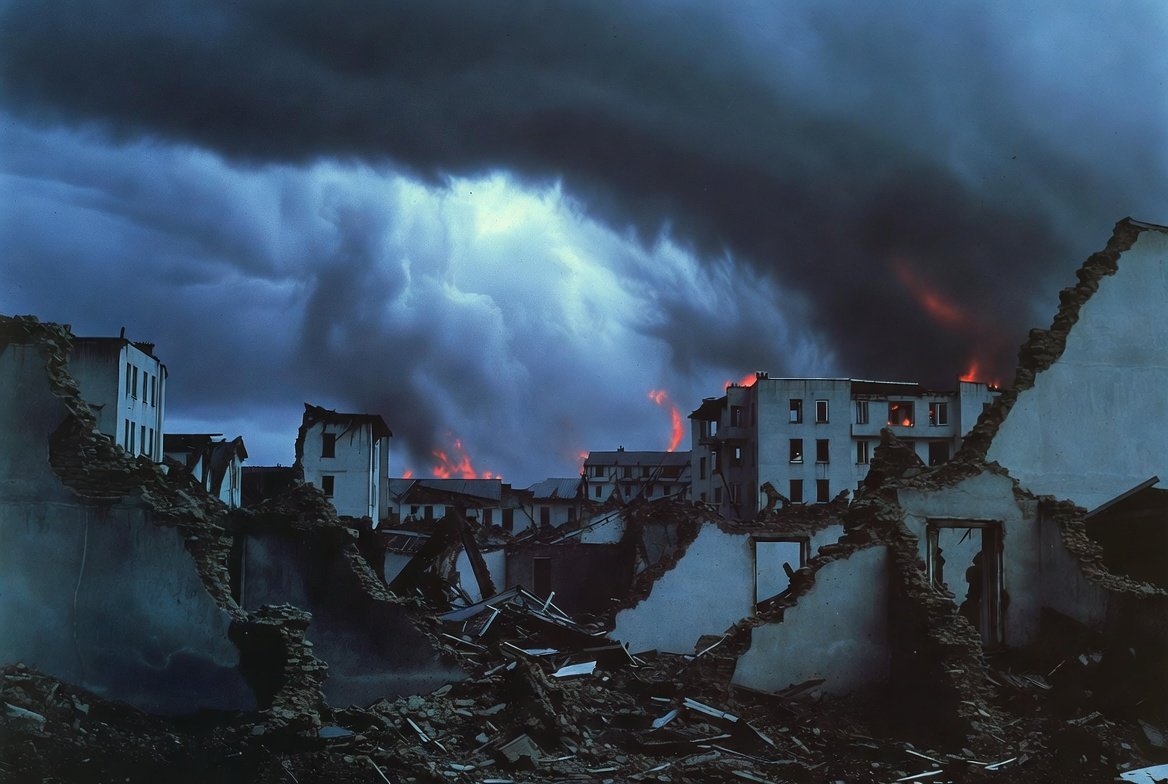
A Rush of Blood to the Head was born out of the pressure to prove that Coldplay could deliver again. It was a turning point. It’s 2002, right after the explosive success of Parachutes, which had brought Yellow to radio stations all over the world. Chris Martin and his band now had to prove they weren’t just a one-hit phenomenon. The track that closes the album of the same name, according to Martin himself, captures the sense of urgency that ran through their entire work at the time. The expression in the title, “a rush of blood to the head,” refers to that sudden surge of emotion that leads to impulsive actions, often followed by regret. Martin chose it because it perfectly reflected the band’s state of mind: after the first record, everything felt possible, but they had to act fast before the wave faded.
The album’s background: urgency and historical context
The album A Rush of Blood to the Head arrived just two years after Parachutes, a very short gap by industry standards. Coldplay recorded most of the material between London and Liverpool, working again with producer Ken Nelson but pushing their sound toward broader horizons.
The year 2001 had been marked by the September 11 attacks, an event that deeply affected many British artists. Martin said in interviews at the time that the period created a sense of instability in him: you never know what might happen tomorrow, so you might as well do things now. The whole album breathes that urgency, but the title track embodies it almost literally. It’s not just a rock song, it’s a confession in musical form about how emotions can take over and lead to extreme, often self-destructive decisions.
Chris Martin and the tribute to Johnny Cash
One of the most interesting aspects of the track is Martin’s vocal choice. For the first time, he steps away from the light falsetto that made Yellow famous and drops into a deep, almost cavernous baritone.
He explained that it was a tribute to Johnny Cash, Bob Dylan and Hank Williams, great American songwriters capable of telling complex stories with minimal arrangements. That lower register gives the song a weight that contrasts with its almost hypnotic melody, creating constant tension. It’s not accidental. Martin wanted the voice to sound like it came from a man crushed by his own choices, not a rising pop star.
The central theme: when emotions take over
At the core of A Rush of Blood to the Head lies the idea of impulsivity. The narrator finds himself in a moment of loss, likely the end of a relationship, and reacts with fantasies of revenge. But it’s not cold, calculated revenge. It’s an emotional explosion born from pain and the desire to erase everything that reminds him of failure.
Martin confirmed in interviews that the song is about losing control of your emotions and seeking a violent sense of payback, only to later blame it on a “rush of blood to the head.” It’s a way of exploring how love, when it ends badly, can turn into something darker and self-destructive, yet also strangely cathartic.
Lyrics analysis: destructive intentions in the first verse
The opening images of the song are highly visual:
“I’m gonna buy this place and burn it down
I’m gonna put it six feet underground”
Here the narrator imagines buying the place that holds all the painful memories, perhaps a house shared with a former partner, and completely destroying it. It’s not just an outburst. It’s a symbolic attempt to erase the past.
Martin uses this metaphor to show how, in moments of emotional crisis, the mind looks for extreme solutions. The “place” becomes a container of all wounds, and burning it means freeing yourself from them. And yet, beneath the anger, you can already sense regret, as if the narrator knows that no fire can truly erase what has been lived.
The chorus and the confession of impulse
The chorus reinforces this sense of surrender:
“Oh I’m gonna buy this place and see it burn
Do back the things it did to you in return”
The desire for revenge blends with compassion. The narrator wants to “give back” the pain suffered by the person he loved, almost as if he’s trying to protect them rather than himself. This is a key moment in understanding the meaning of the song. It becomes a distorted act of love.
Martin plays with this paradox. The person who wants to destroy everything is also, deep down, trying to protect. This duality gives the lyrics much more depth than they might seem at first listen.
The second part: inner conflict and regret
Later, the song moves into an even more personal space:
“I’m gonna buy a gun and start a war
If you can tell me something worth fighting for”
The image of war is metaphorical, but the narrator is ready to fight. He just needs a real reason. This is the moment when impulsivity collides with reality. Without a meaningful purpose, even the fiercest anger feels empty.
The final line, “Blame it all upon a rush of blood to the head,” is the true confession. There’s no real justification, just the awareness that everything came from a moment of lost control. This circular ending gives the song a strong psychological depth, almost like a study of how the mind defends itself.
Biographical and cultural context of Coldplay in 2002
To fully understand the song, you have to remember where the band stood at the time. Chris Martin was going through major changes in his life. Sudden fame, public expectations, and his relationship with Gwyneth Paltrow, which would soon become public.
The entire album deals with relationships breaking and rebuilding, with global and personal fears intertwining. The title track captures the moment when private life collides with external pressure. Many fans have also seen in it a reflection of post-9/11 tensions, a world that felt like it was on the verge of collapse, where acting on impulse seemed like the only possible response.
The legacy of the song
Today, more than twenty years later, A Rush of Blood to the Head remains one of the band’s creative peaks. The album sold over twenty million copies worldwide and established Coldplay as one of the defining acts of 2000s alternative rock.
The closing track, with its dark and reflective tone, contrasts perfectly with more radio-friendly singles like In My Place or Clocks. It’s where the band shows its most mature side, willing to explore the darker corners of human emotion without filters. For anyone looking for the meaning of A Rush of Blood to the Head, this track is a lesson in how intense emotions can be both destructive and liberating.
Why the song still resonates today
In an era where social media amplifies every impulse, Martin’s words feel incredibly relevant. How many times have we reacted impulsively to pain, only to regret it later? The song doesn’t judge. It simply describes the mechanism, leaving listeners free to recognize themselves in it.
That’s Coldplay’s real strength. They tell deeply personal stories without ever becoming trivial.
If you’ve ever experienced a moment where emotions took over and you wondered what that “rush of blood to the head” really meant, you’re not alone.