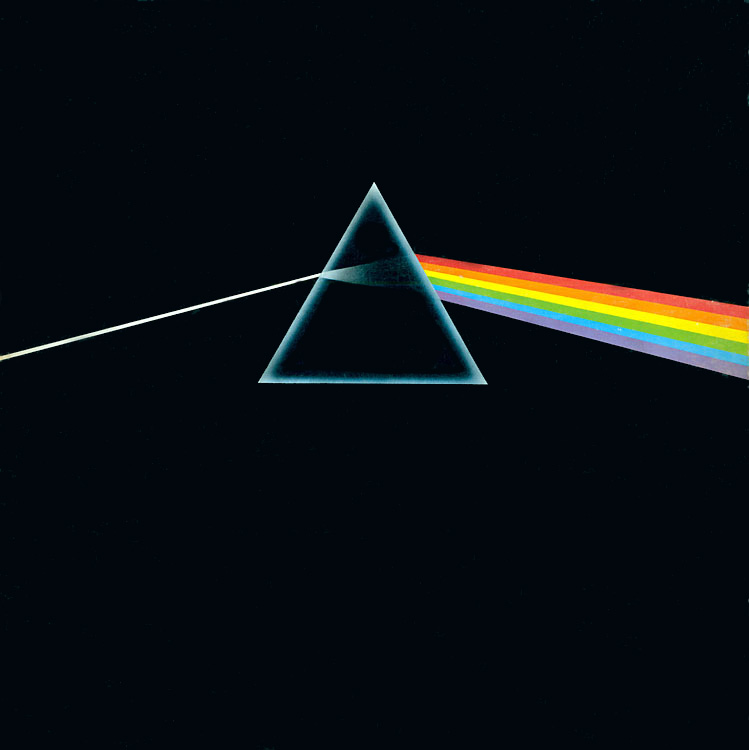
When The Dark Side of the Moon was released in 1973, Pink Floyd were not simply delivering another studio album. They were constructing a unified work, where every track contributes to a broader reflection on the pressures that shape human life.
The album opens with “Speak to Me”, a fragmented introduction built from heartbeats, voices, and sonic motifs that anticipate what is to come. It does not function as a traditional song, but as a thematic gateway. Immediately after, “Breathe” establishes a more intimate tone, reflecting on everyday existence and the subtle ways in which people drift into routines without questioning them.
The sense of tension increases with “On the Run”, a largely instrumental piece that transforms anxiety into sound. Rather than describing modern restlessness, it makes the listener feel it. The pulse, repetition, and atmosphere mirror the experience of constant motion without genuine direction.
With “Time”, the album reaches one of its emotional peaks. Here, the focus turns to the realization that years can pass unnoticed. The song does not dramatize aging; it captures the quiet shock of recognizing that life has been slipping by while one was distracted.
The first half concludes with “The Great Gig in the Sky”, a meditation on mortality that relies more on emotion than on lyrics. The wordless vocal performance conveys fear, resistance, and acceptance without explicitly explaining them, turning death into a deeply human experience rather than a distant abstraction.
The second side shifts perspective. “Money” introduces a sharper tone, examining the seductive and contradictory relationship between individuals and wealth. Its irony exposes how financial ambition shapes values and behavior without resorting to simplistic moralizing.
With “Us and Them,” the focus widens to social division and conflict. The song reflects not only on war, but on the broader human tendency to separate the world into opposing sides. It observes rather than condemns, presenting division as a recurring pattern.
The instrumental “Any Colour You Like” subtly addresses the illusion of choice. The title suggests freedom, yet implies limitation. Within the album’s context, it becomes a reflection on perceived individuality within structured systems.
As the record approaches its conclusion, “Brain Damage” brings the theme of mental fragility into focus. Madness is not portrayed as an anomaly belonging to someone else, but as a vulnerability that can emerge under sustained pressure.
Finally, “Eclipse” serves as a summation. Through a cumulative series of lines that gather every aspect of experience — emotions, actions, contradictions — the album closes on the image of an eclipse. Light exists, but it can be obscured. The heartbeat returns, reinforcing the circular structure of the work.
A cohesive and enduring concept
What distinguishes The Dark Side of the Moon is not merely the strength of its individual tracks, but their continuity. Each song builds upon the previous one, creating a psychological and emotional arc rather than a collection of separate pieces.
The album does not provide answers. It does not propose solutions to the pressures it explores. Instead, it presents a clear-eyed observation of modern existence — time passing, money influencing, divisions forming, minds straining.
That honesty is precisely why it continues to resonate decades later.