
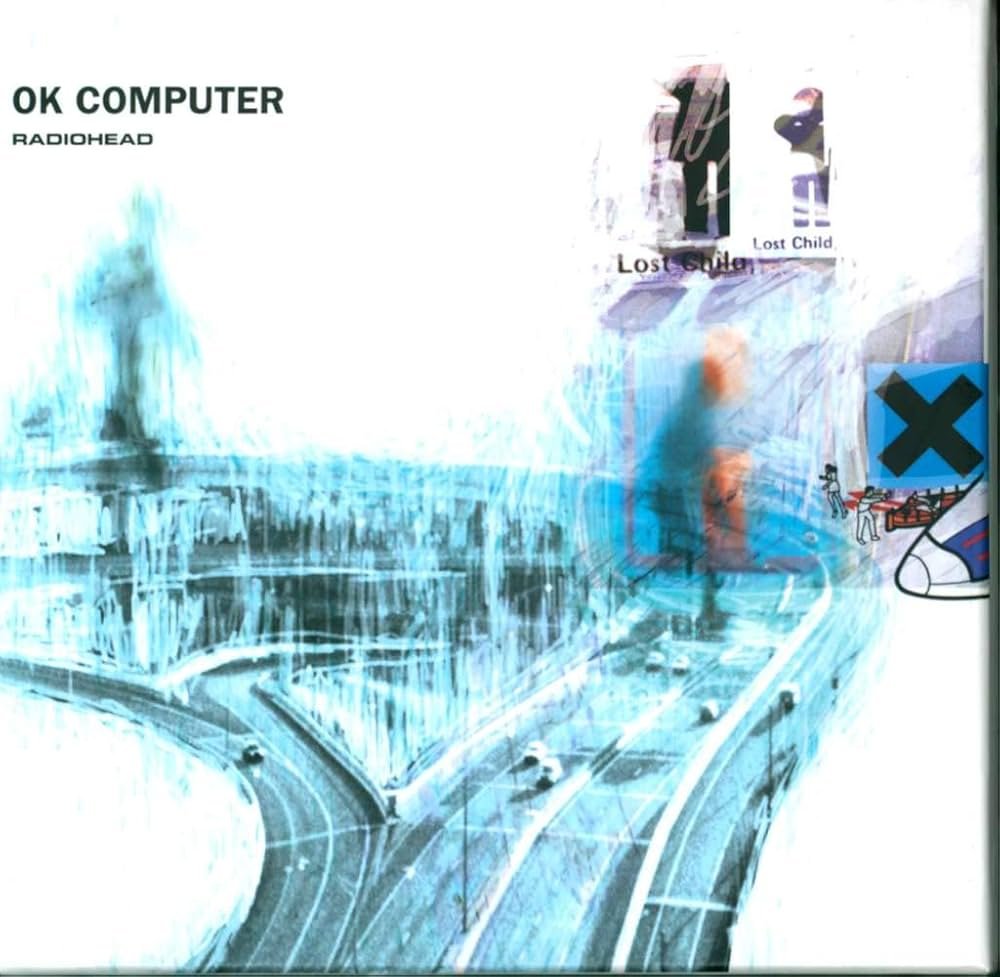
When OK Computer was released in 1997, smartphones did not exist. Social media had not yet reshaped identity. Surveillance capitalism had not fully formed. Yet the album feels prophetic.
It is not about technology in a mechanical sense. It is about the emotional consequences of acceleration.
From the opening track, Airbag, survival is mediated by machinery. Rebirth is procedural, not spiritual. The human condition is already intertwined with systems.
Paranoid Android fractures structure itself. Rage, irony, vulnerability — all collide. The song mirrors cognitive overload before the term became common vocabulary.
Subterranean Homesick Alien introduces another layer: the longing to be seen from outside the system. Alienation becomes observational rather than explosive.
At the conceptual center sits Fitter Happier. A synthesized voice outlines the ideal modern subject — productive, controlled, optimized. The list sounds reasonable. But its cumulative effect feels suffocating.
Surrounding that core, the album shifts perspectives. Electioneering exposes politics as performance. Climbing Up the Walls turns anxiety inward. No Surprises captures exhaustion — not dramatic collapse, but quiet resignation.
The album’s power lies in anticipation rather than accusation. It sensed the emotional climate of the digital age before it fully emerged.
Musically, OK Computer avoids formula. Layered arrangements, shifting dynamics, suspended atmospheres — the sound design reinforces fragmentation.
And finally, The Tourist. After the noise and analysis, the album closes with a simple instruction: slow down.
OK Computer mapped systemic alienation.
It does not depict apocalypse.
It depicts normalization.
And in that normalization lies its enduring relevance.